
A Doula’s Work — and Why Parents Say It Matters
Christine Herrera is one of Central New York’s most in-demand doulas. Her stories reveal why more families are seeking this kind of birth support.
Christine Herrera | photo courtesy of Christine Herrera
by Maggie Nerz Iribarne
Christine Herrera has tried not to cry at the many births she’s attended across the two decades as a certified doula. She doesn’t want to tread on the parents’ emotional ground.
But there was one that took her down.
A couple who felt traumatized by their first baby’s emergency c-section wanted to deliver their second child vaginally. The doctor was supportive, but warned a c-section might still be in the cards.
Christine offered encouragement as labor intensified. Soon, the mother started saying, “I can't do this. It's happening again.”
Although the birth mother was scared, everything was moving along as planned.
“She was progressing beautifully!” Christine said. “I got close to her, made eye contact, and said, ‘You are doing this. Right now. Your body is working. Stay with me.’ Her partner held her hand and echoed the same encouragement.”
Soon, the mom’s wish for a natural birth became a reality, and the moment her baby was placed on her chest, she sobbed.
“Once she had her moment, she turned to me and said, ‘You believed in me when I couldn't believe in myself. I healed something I didn't know I could heal,’” Christine said.
Christine owns CNY Doula Connection, an award-winning agency that supports expectant mothers and their partners. Often confused with midwives, doulas do not deliver babies. Doulas coach women and their families through pregnancy and labor, providing additional physical, informational, and emotional care options that fall outside of the scope of most medical providers. Research shows that doulas improve birth outcomes and postpartum health. For Christine, this impact wasn’t just a research statistic. It was something she experienced during her own pregnancies, and she continues to live it every day.
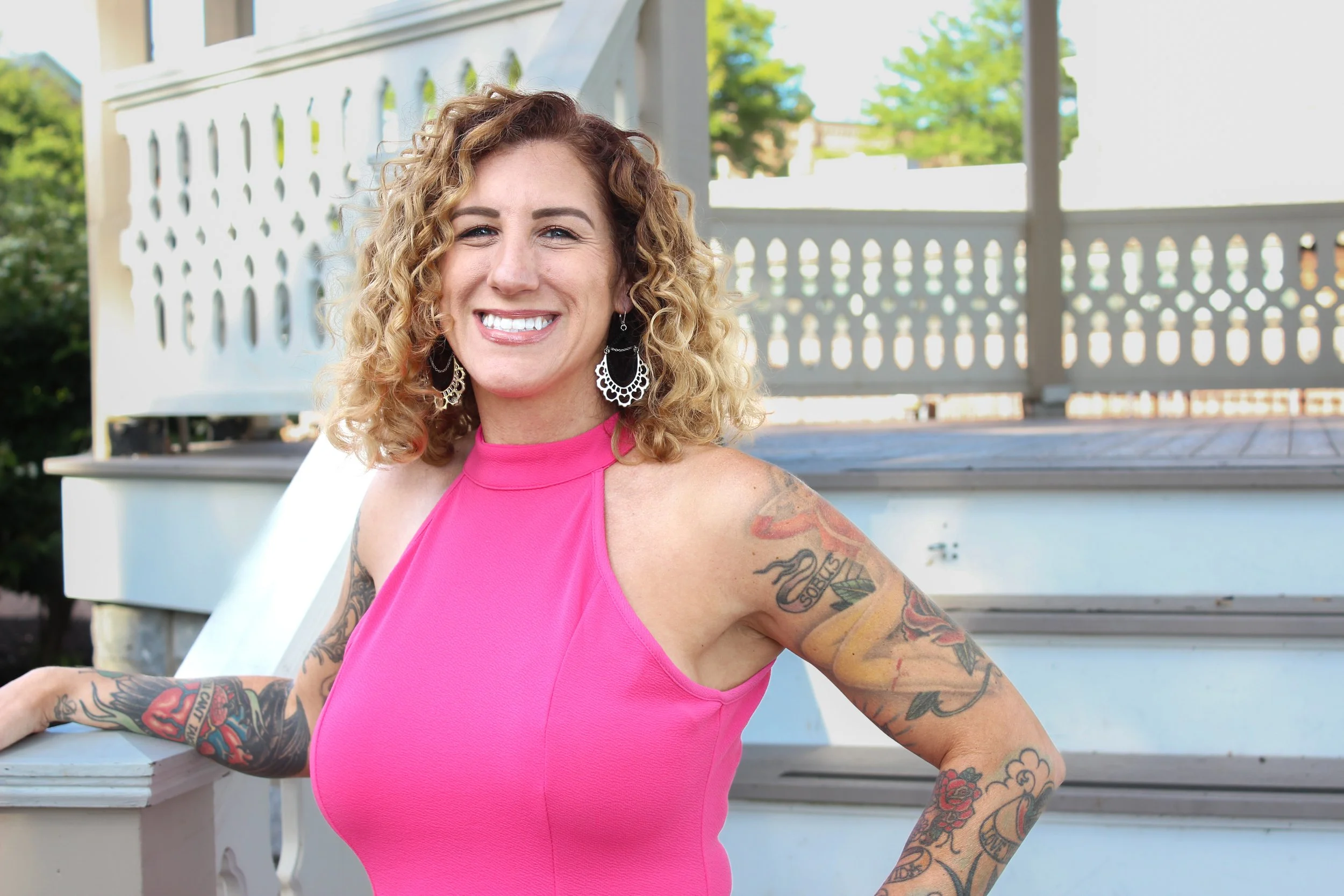
Christine Herrera | photo courtesy of Christine Herrera
Becoming a Doula
When pregnant with her first child, Christine worked with a doula. The positive experience made her aware of birth choices that many expectant families never consider, and she decided to become a doula herself. Along the way, she had two more children and used doulas for those pregnancies.
Starting a new business while raising a young family was stimulating, but also overwhelming.
“I said ‘yes’ to everything because I wanted to help everyone, which meant I was stretched pretty thin. I'd be [awake overnight] supporting a laboring client for over 12 hours and then trying to manage spending time with my kids during the day on little sleep. But those early births taught me so much,” Christine said.
Most importantly, Christine learned to set clear boundaries, which ultimately led to a sustainable business.
Now, 20 years later, her children are young adults, her business is thriving, and that first impulse to “want to help everyone” continues. Regardless of family structure, birth preferences, or personal circumstances, Christine’s philosophy is one of unconditional care and respect.
Teaching Confidence
For some clients, unconditional care and respect in pregnancy and postpartum means starting with something very basic: showing them that they deserve it.
“I worked with a first-time mom who booked support with me around 20 weeks pregnant, absolutely terrified,” Christine said. “She'd had some difficult medical experiences in the past where she felt unheard and dismissed by providers. … She would constantly apologize during our talks and prenatal visits for asking questions or having specific preferences. She genuinely didn't believe she deserved to advocate for herself!”
Christine was determined to make her client feel confident. Together, they wrote down preferences and practiced asking questions.
“I reminded her again and again that her voice mattered, that her instincts were valid,” Christine said. “By the time her due date approached, she was a different person. At one of her final prenatal appointments, her doctor suggested an intervention she wasn't comfortable with. She called me afterward in tears, happy tears, and said, ‘I actually spoke up for myself and my baby!’”
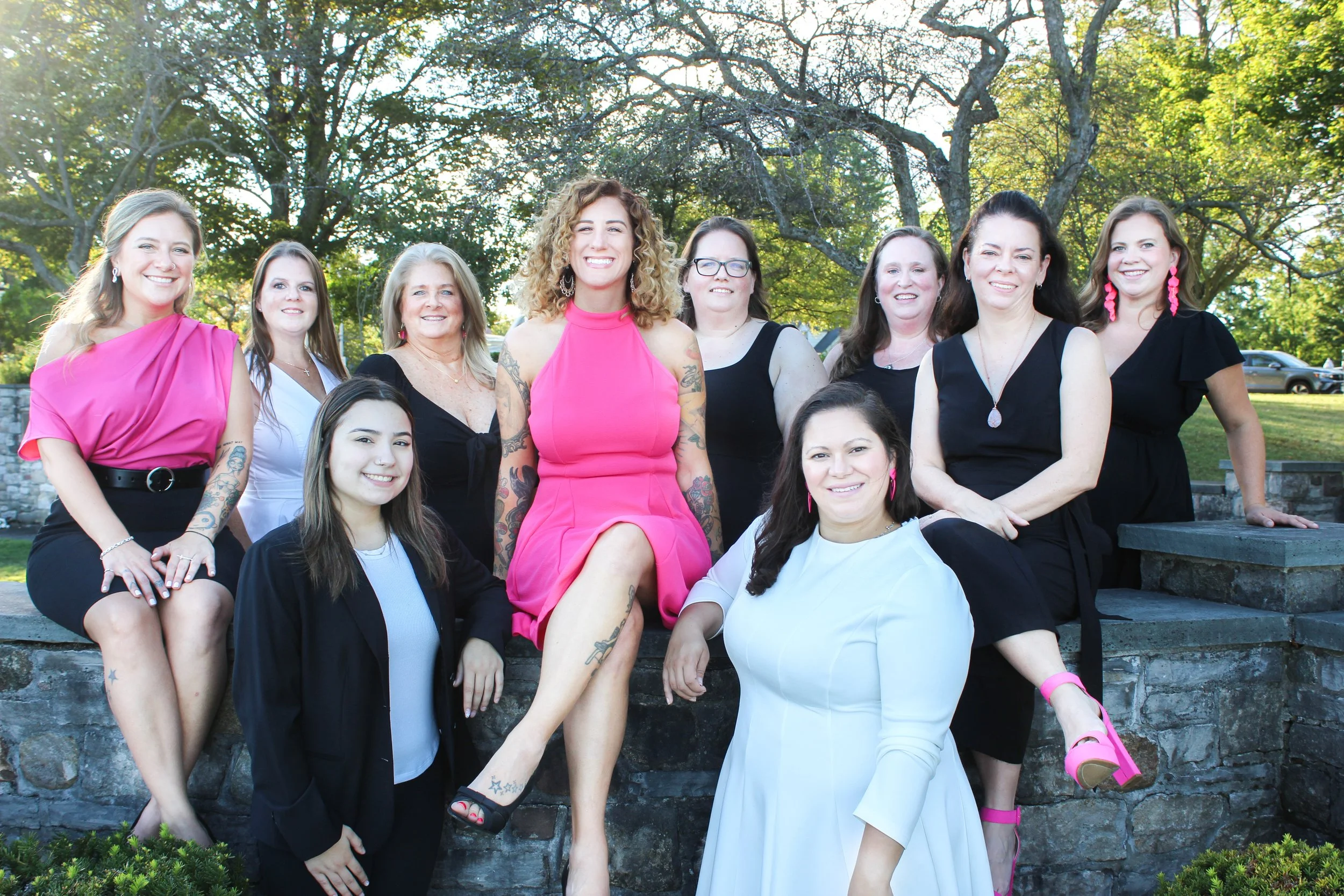
Christine Herrera (center) and the CNY Doula Connection team | photo courtesy of Christine Herrera
Bringing New Services To CNY Moms
Beyond birth, CNY Doula Connection offers informational workshops, infant CPR, lactation support, loss support, NICU support, feeding tube support, belly binding instruction, overnight care, meals from a professional chef, and breast-milk jewelry creation. They aim to fill every need.
Christine has a distinct passion for placenta encapsulation, a process that involves transforming the placenta into pills. After the birth, she transports the placenta to her sanitized workplace, where she steams, dehydrates, and grinds the placenta into a powder that is divided into approximately 120 capsules to be ingested by the new mom.
“It’s such an amazing organ that gets zero credit,” Christine said. “It sustained a life through pregnancy! In many other cultures around the world, the placenta is honored for its remarkable work.”
Christine earned the nickname "placenta lady" through her work and remains fascinated by the many ways placental tissue has been studied in medical and healing contexts. Her goal is to provide new mothers with options for maintaining hormone balance during the difficult postpartum period.
Recognizing Hidden Struggles
Postpartum hormonal shifts can quickly tip into serious mental health conditions, and the signs aren’t always obvious. Christine recalls seeing this in one mom who had severe postpartum anxiety.
“When I arrived for my first shift at about 10 days postpartum, everything in her home looked immaculate. Perfectly organized, spotlessly clean. The baby was sleeping peacefully in the done-up nursery. But really, this mom was completely unraveling,” she said.
The mom had notes, schedules, and charts to track feeding and diapers. She stayed up late Googling symptoms, she constantly checked to make sure the baby was breathing, and she was terrified to let anyone hold the baby.
“When I gently asked how she was doing, she broke down,” Christine said, “She knew this wasn't healthy but didn't know how to stop herself.”
Christine explained what postpartum anxiety looks like: hypervigilance, the inability to rest even when you have the opportunity, and the constant sense that something is wrong. She gently explained that it wasn't a character flaw, and it was treatable. They immediately scheduled appointments with a care team.
“We also worked on rebuilding her confidence as a mother through very practical, hands-on support," Christine said. “I helped her learn to read her baby's cues so she could understand what he needed instead of just guessing and panicking.”
The anxiety didn't disappear overnight, but she learned tools to manage it. By the time Christine left, the mom was a confident, amazing parent.
Balancing Life and Birth
Just like motherhood, life as a doula is a constant struggle to find balance, but it’s a process that Christine appreciates.
“I think that I have taught [my own kids] something valuable about commitment and showing up for people during their most vulnerable moments. There were definitely things I missed like dinners and rescheduled plans, but we would just make do. It's not uncommon for us to celebrate birthdays and other family events around when my clients are due. Even if that is a month earlier or later,” she said.
Christine recognizes the transformational power and joy of sharing this impactful journey with so many women and their families.
“What really fills my cup is seeing someone who doubted themselves, who was nervous and unsure, come out of their birth feeling like they accomplished something amazing. Every single family, every single journey is different, and each one shapes us as doulas. I am so honored to be part of everybody's story,” Christine said.