
How Scouting Shaped My Life
My parents wanted me to find friends and confidence. I found much more.
By John Whitford
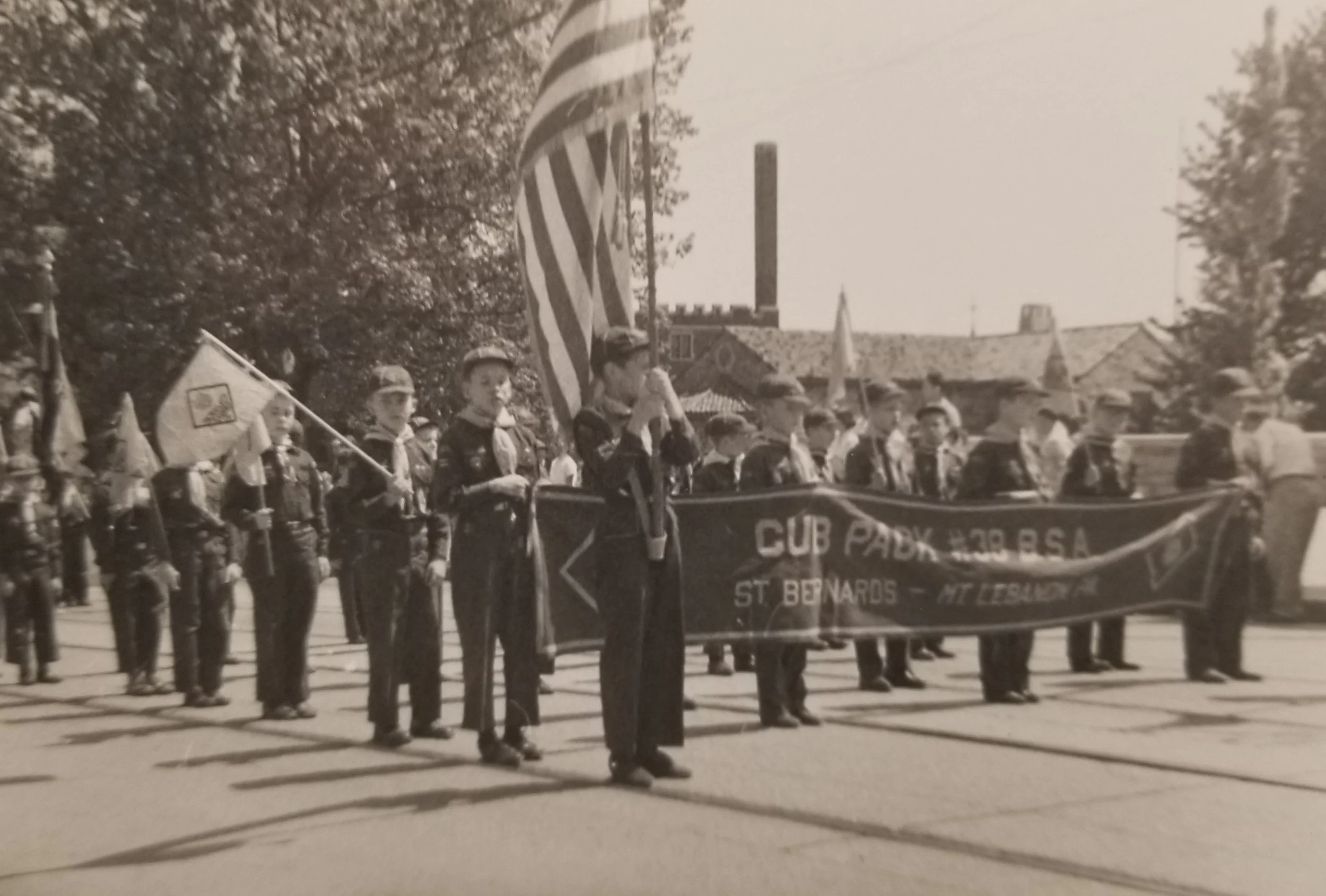
John’s Club Pack
In 1957, my mother signed me up for the Cub Scouts, and that’s when my life shifted. In those days, it was pretty much Little League and/or Scouts. In fact, Scouts had nearly 20% of the male youth market, according to the U.S. Department of Education.
I think my parents signed me up because my teacher said I was “not really participating in class.” I was quiet, introverted, and in the remedial reading group. Cub Scouting changed that. Within a few months, I had new friends, and my literacy skyrocketed from reading Boys’ Life magazine, the scouting publication that came in the mail every month.
Eventually, my shyness turned into confidence as I marched in parades, went to weekly meetings, and earned special badges. I was proud of my uniform and tried to live up to the Scout Oath and Law. I still have my handbooks with my parents’ signatures where they signed off on my work.
At 11 years old, I graduated to Boy Scouts. It was a big transition since we were expected to be self-directed by advancing at our own pace and scheduling appointments with merit badge counselors. Even with the added responsibility, I was having fun, so the skills, character-building, leadership, and citizenship snuck up on me. Every meeting included games, and while I was playing, I learned lessons that would stay with me for life.
I Learned Survival Skills — and Actually Used Them
The first aid training came in handy right away. One day, I fell and cut my wrist, and boy, did it bleed. I applied direct pressure on the wound, washed it, and then told my mother I needed stitches. Sure enough, a trip to the doctor and a couple of stitches later, all was well. I still have the scar.
Later, in my mid-thirties, I was at a movie with my kids and popped a small jawbreaker into my mouth, which got lodged in my windpipe. Boy Scouts had taught me the Heimlich maneuver, including how to perform it on myself. Because of that training, I am still here.
On another occasion, I had to splint a young boy’s broken arm (ironically, using a Boys’ Life magazine). Months later, I saw him signing up for Cub Scouts. His dad told me that the doctors were impressed with what I’d done. Better yet, the medical staff was careful not to damage the magazine so the boy could read it while waiting for his x-rays to come back.
When it comes to adventure, few things can rival scouting. Over the years, I explored multiple caves, traveled 150 miles down the Allegheny by canoe, and took a 22-day trip by bus from Pittsburgh to Philmont Scout Ranch in New Mexico. On that trip, we rescued a teenage girl stranded on a ledge about 40 feet up at the Garden of the Gods. I also learned to “pay my own way” — I saved up $160 to go to Philmont. That was a lot in 1963 dollars.
Scouting taught me about accountability and service. For several years, I was troop quartermaster and managed the gear for our monthly campouts. We also focused on our community, from good deeds to troop-wide service projects like stream improvements and tree planting.
I couldn’t have done it without the support of my parents, and I do believe scouting strengthened our relationship. My mother was a “den mother,” which meant she led our Cub Scout group, and my dad came on many of the camping trips. They were both so proud when I received my Eagle Scout Award.
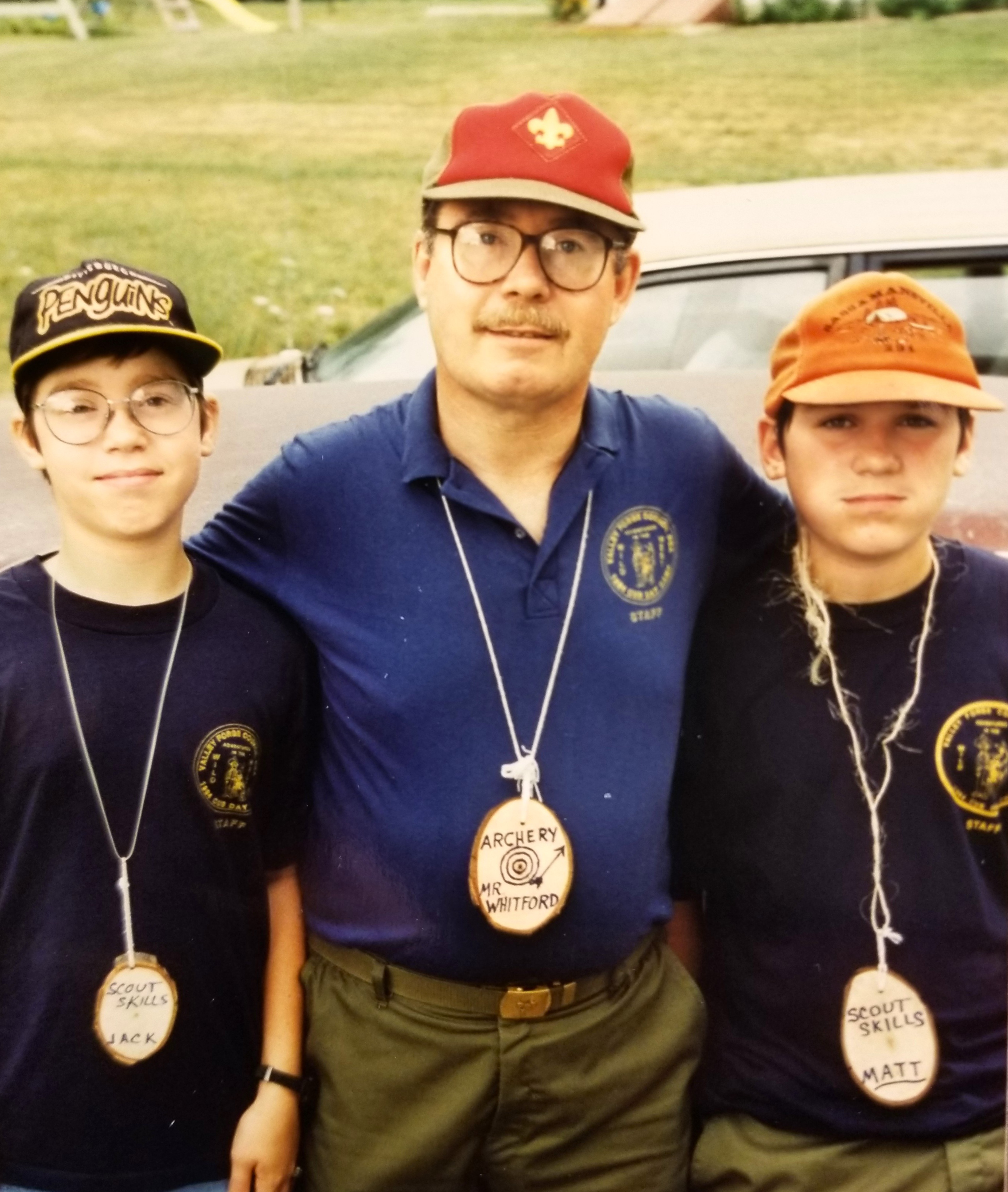
John and his two boys.
Scouting Guided My Family and Parenting
As an adult, I tailored my education to work for the Scouts, and in 1971, I accepted a position in Pennsylvania. This started a 30-year, on-and-off, professional relationship, spread across seven different councils. Here, I have to thank my wife and children for tolerating the demands of this environment. It was meaningful work, but meeting the needs of hundreds of outstanding volunteers can be a 24/7 job.
There were years when I worked other jobs, including a role as a counselor in a juvenile detention facility. If anything teaches you the value of scouting, that will.
When my own children, Matt and Jack, were ready for Cub Scouts, the local pack had stopped meeting, so I recruited five other families, and everyone took leadership roles. Over the next two years, it was so successful that we grew to over 50 Cubs and started a second pack. My boys loved the parades, pinewood derbies (they still have their cars), the trip to Gettysburg, and achievements like the Arrow of Light award.
As the boys grew, we relocated for my job. Scouting eased the transition by helping all of us find new friends.
Both boys were helpful when I was running camp programs. Jack taught Cubs knot tying and he even showed an adult counselor how to properly string the bows for archery. Once, at the close of an event, a volunteer saw Matt heading into the bathrooms with a janitor’s mop to clean. She said, “Who told him to do that?” Another volunteer said, “No one. That’s John’s son.”
Now, as adults, they both have good jobs and success. I’m sure that those experiences helped shape the fine men that they have become.
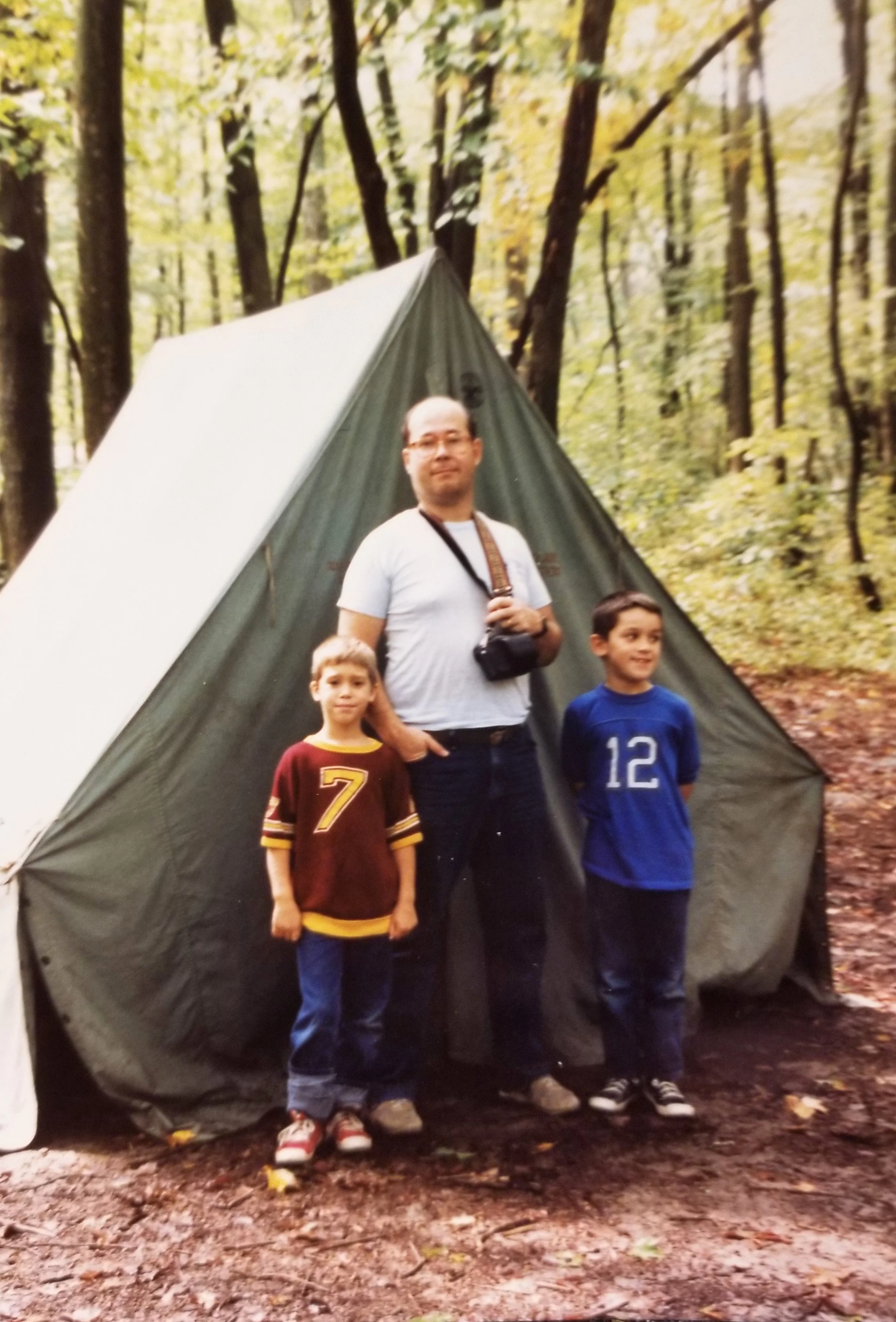
John and his two boys on a camping trip.
I’ve Watched The Program Change
In recent decades, Boy Scouts of America (BSA) has faced controversies. These include historical exclusion based on gender, sexual orientation, and other characteristics, and also sexual abuse cases — many involving incidents that occurred in the mid-20th century, before modern youth protection policies and safeguards were put in place.
From my own experience, I never encountered bigotry, hate, or prejudice within the program. I met my first Black friends and Jewish friends through the program, and I worked alongside men and women of many faiths and backgrounds, for whom I have great respect. Because many of the sponsors were religious and civic organizations, the past BSA policies reflected the beliefs of chartered partners, and local councils were not permitted to deviate from them. The policies were changed in the 2010s to open up membership to everyone, including girls. To address youth safety, they have background checks, ongoing training, and requirements for multiple adults to be present at all times. While policies continue to evolve, there is no question that inclusion and youth protection are taken seriously.
The organization rebranded last year as Scouting America. Now, any child can find a community by joining. Today, the program can be a one-stop shop for parents with both boys and girls.
My Message To Other Parents
My mother and father put me in Scouts because I needed to find friends and build skills. Above all, I believe that they wanted me to discover the confident leader that I was capable of becoming. When my own kids were born, I did the same for them, and it led them into service and success. They always had a reliable, consistent community to lean on, even during the difficult process of relocating.
If you can relate to any of this, you might want to consider scouting for your own kids. It offers the challenges, adventures, values, and skills that will help them have happier, more successful lives. And who knows, you might find that the program inspires your family in unexpected ways, just like it did for mine.