
A New Chapter for Women’s Health: Inside St. Joseph’s Menopause Clinic
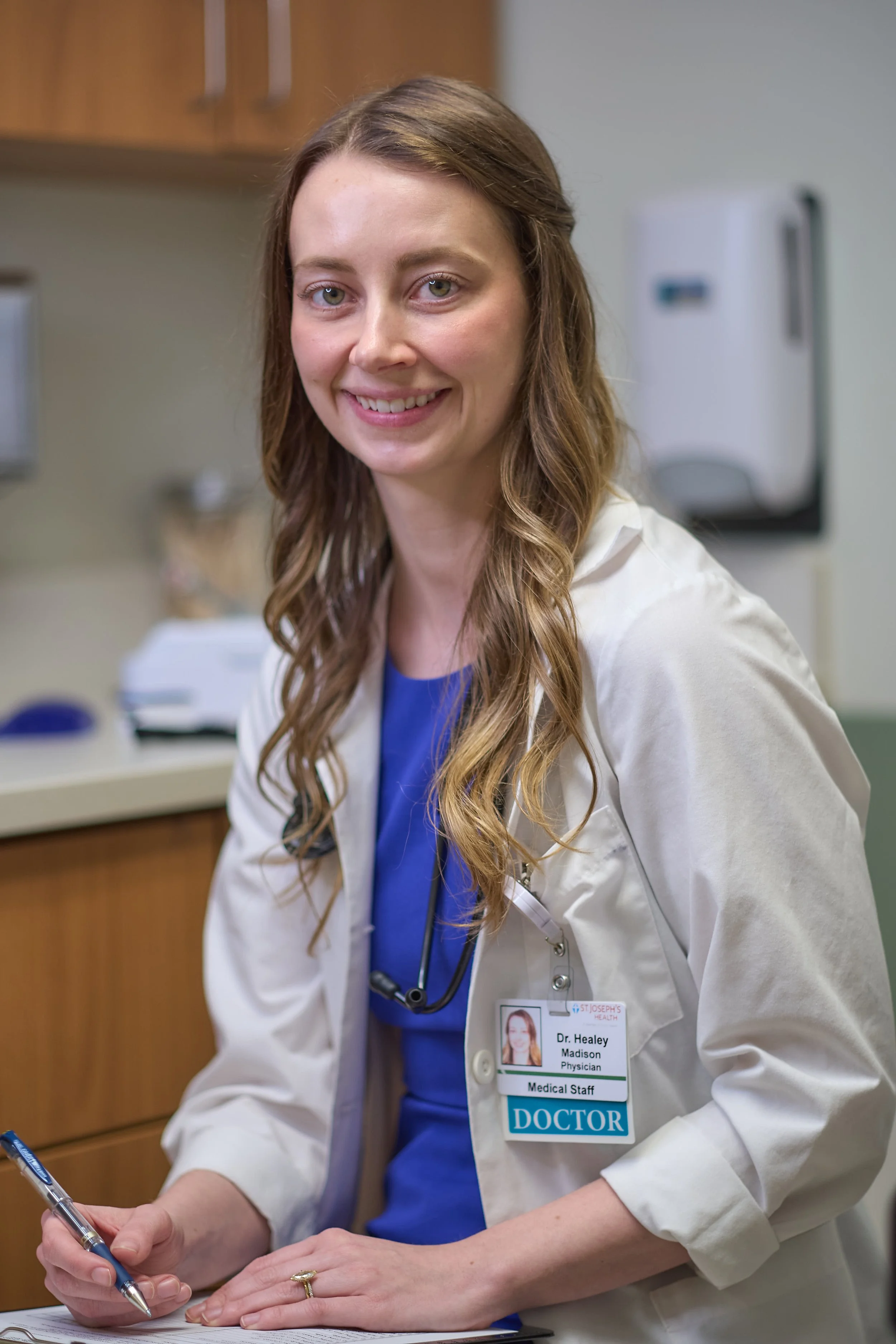
Dr. Madison Healey | Photo courtesy of St. Joseph’s Hospital
Women are finally saying it out loud: I’ve had enough—I don’t want to keep feeling this way.
For years, women suffered through the symptoms of perimenopause and menopause quietly. Sleepless nights, brain fog, anxiety, mood swings, and exhaustion often went unexplained and were chalked up to stress, aging, or simply “a part of life”.
“It frustrates me that women are socialized to feel that what we have is good enough,” said Dr. Madison Healey, family medicine physician at St. Joseph’s Health. “I can’t tell you the number of women who I’ve seen who say, ‘I get hot flashes and I can’t sleep, but it is what it is’. They brush off their problems or just learn to live with them. We don’t have to do that. We don’t do that in other parts of life. If you’re uncomfortable, treat it.”
A cultural shift is happening – and women’s silent suffering is being replaced with advocacy, awareness, and, most importantly, access to better care.
At St. Joseph’s Health, that shift is taking shape in a meaningful way. The new St. Joseph’s Physicians Menopause Clinic, led by Dr. Healey, is giving women in Central New York a place where their experiences are not only recognized and listened to but taken seriously. The clinic arrives at a time when menopause has become a national conversation. More women are speaking up and comparing notes.
“Many women experience symptoms for years without realizing they are related to hormonal changes,” Dr. Healey says. “Education and early intervention can make a profound difference in both quality of life and long-term health outcomes.”
That gap between symptoms and answers is something she sees every day. Women often come in saying they just don’t feel like themselves and are struggling with sleep, mood, focus, muscle aches, or energy. Some have gone from appointment to appointment without ever having menopause or perimenopause mentioned.
“The number of women who come in and say, ‘I can’t put my finger on it, but I don’t feel like myself,’ is huge,” said Dr. Healey. “Once they understand what’s happening and we get them on a personalized plan, patients will say ‘Oh my gosh, I feel like myself again’.”
That kind of transformation is exactly why the clinic was created - not just to treat symptoms, but to connect the dots earlier and more effectively.
Part of that progress is also tied to evolving science. For years, concerns about hormone replacement therapy made both patients and providers cautious, mostly because of a long-standing FDA black box warning. But that warning was recently removed for certain hormone replacement therapies, because of evidence that the warning exaggerated the risks. Newer research has shown that for healthy women who start treatment around the time of menopause, the benefits often outweigh those risks.
For Dr. Healey, this change makes it easier to have a more personalized conversation about menopause care. Hormone therapy isn't the right choice for everyone, but it's now one of several options for women.
At the clinic, menopause is approached as a major phase of health that affects the entire body. Hormonal changes during midlife can influence heart health, bone density, metabolism, and mental well-being - factors that shape long-term health outcomes for years to come.
“Some women will say they can live with hot flashes, and that’s fine,” said Dr. Healey. “But we know that untreated hot flashes can increase your risk of heart disease or dementia. We know that during perimenopause and menopause, women can lose between 10-20% of their bone density, hugely increasing their risk of osteopenia and osteoporosis. We have a huge shift in our metabolism, increasing visceral fat which is dangerous for heart disease and diabetes. So, menopause is not without consequence. It’s a time to lock in fitness, nutrition and medications, if necessary, to lower risk of all these other things that hurt women.”
Care is tailored to each patient, often combining medical treatment with practical lifestyle strategies. It’s a collaborative approach, and Dr. Healey works alongside primary care, women’s health and mental health providers to create a comprehensive care plan that truly supports patients.
“We are hopefully empowering women to stand up and say – ‘no no no, something is wrong, I don’t feel right and I want to get better’. We’re starting to see that,” said Dr. Healey. “Women are finally starting to demand change and more recognition in the health care system.”
The goal of the menopause clinic is simple but powerful: to help women feel like themselves again, and to remind them they don’t have to just push through.
“This shouldn’t be something that’s a big secret,” she says. “Women should be talking to their moms, their sisters, their friends. This is a normal part of life, and it should even be something we celebrate.”
For those ready to start that conversation, the St. Joseph’s Physicians Menopause Clinic is accepting patients. It’s located at the North Medical Center in Liverpool. To learn more or schedule an appointment with Dr. Madison Healey, call 315-452-2828.