
Birth Starts Before Labor: How to Prepare Your Pelvic Floor
By Elisabeth Campbell, PT, DPT, OCS Limitless Physical Therapy
photo by Magnific
Pregnancy is a time of anticipation and preparation; filled with what feels like an endless cycle of questioning. In pelvic health physical therapy, we are constantly screening questions around labor and delivery. We believe that knowledge is power and any guidance we can give to women during this incredible time in their lives can optimize the birthing experience AND pelvic floor outcomes.
The pelvic floor is the series of muscles within the pelvis. They support your pelvic organs, help control bladder and bowel functions, support sexual health, work with your core, hips, back muscles, and diaphragm to control pressure and physical stress. During pregnancy, they are working exponentially greater and greater, relative to the weight of your baby — in other words they are working overtime for 10 months! Then, during labor and delivery they need to voluntarily relax, allowing for softening and lengthening. What many women don't know is that there are steps you can take to support your pelvic floor through these phases.
In the 3rd trimester preparation can begin on a daily basis. The intention is to feel at ease, focus on relaxation and prepping the muscles for lengthening via a series of stretches and deep breathing. These are also positions and strategies that can be utilized during the 1st stage of labor, as contractions begin and are progressing, and as the cervix is thinning and opening to allow for dilation to occur.
During these movements and positions you can concentrate on deep diaphragmatic breaths — allowing your abdominal muscles to relax, lower ribs to flair, keeping your chest and shoulders elaxed and still as you breathe in, followed by a slow and long breath out.
Here are positions to practice:
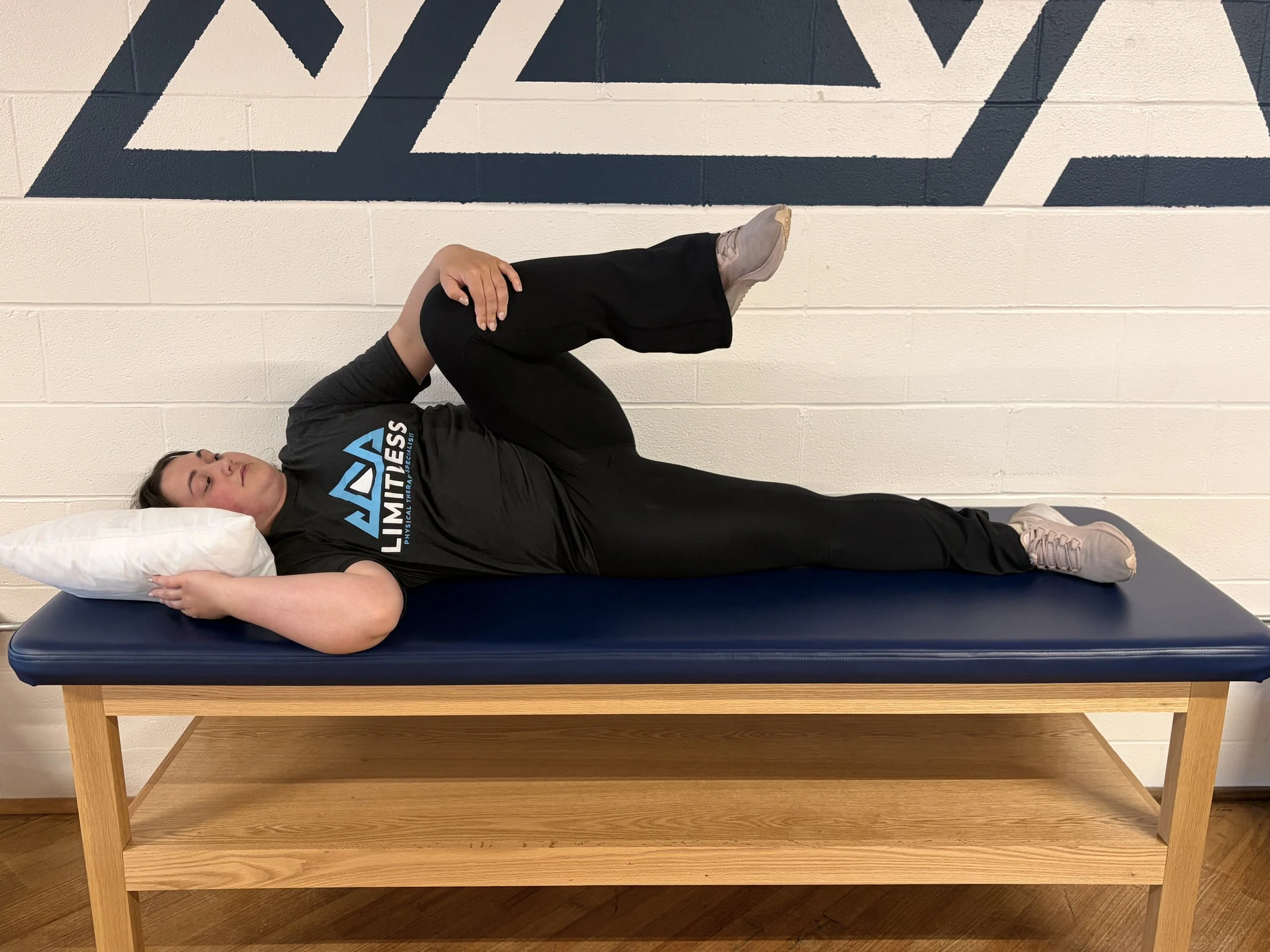
Postion 1
Modified Happy Baby in Side Lying
Photo by Limitless Physical Therapy
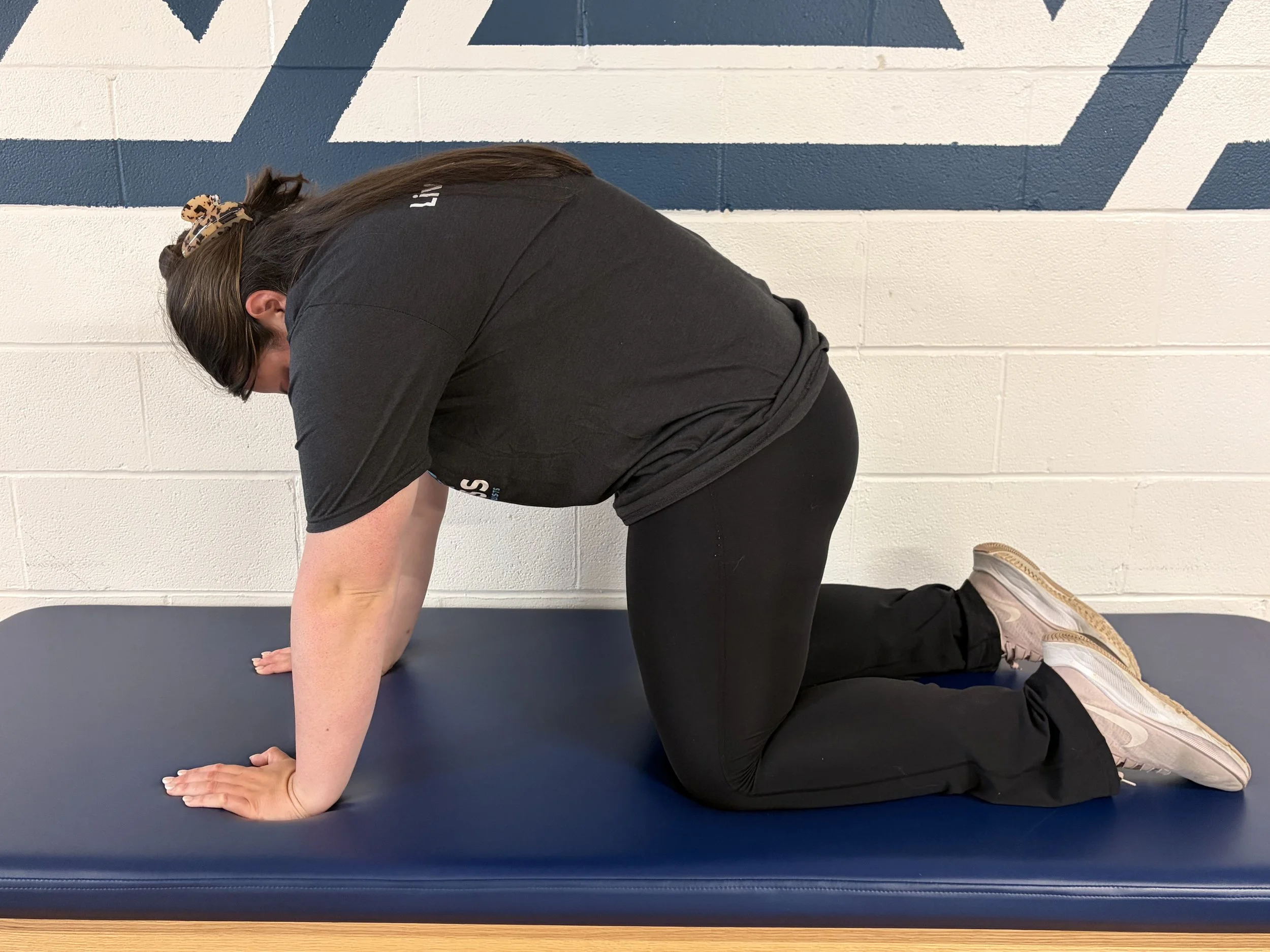
Position 2
Cat Cow
Photo by Limitless Physical Therapy
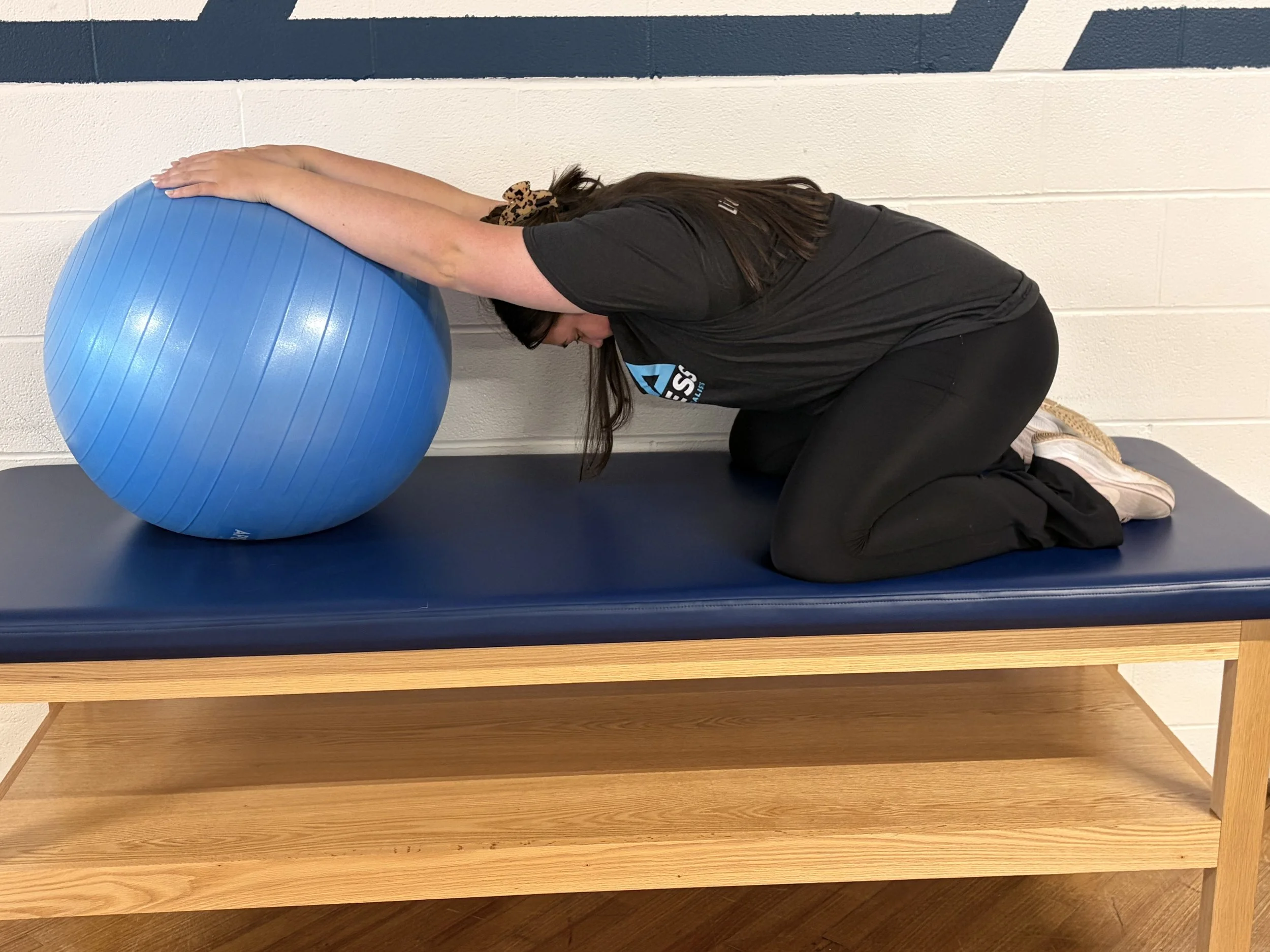
Position 3
Wide Knees Child Pose or Tall Kneeling Childs Pose
Photo by Limitless Physical Therapy
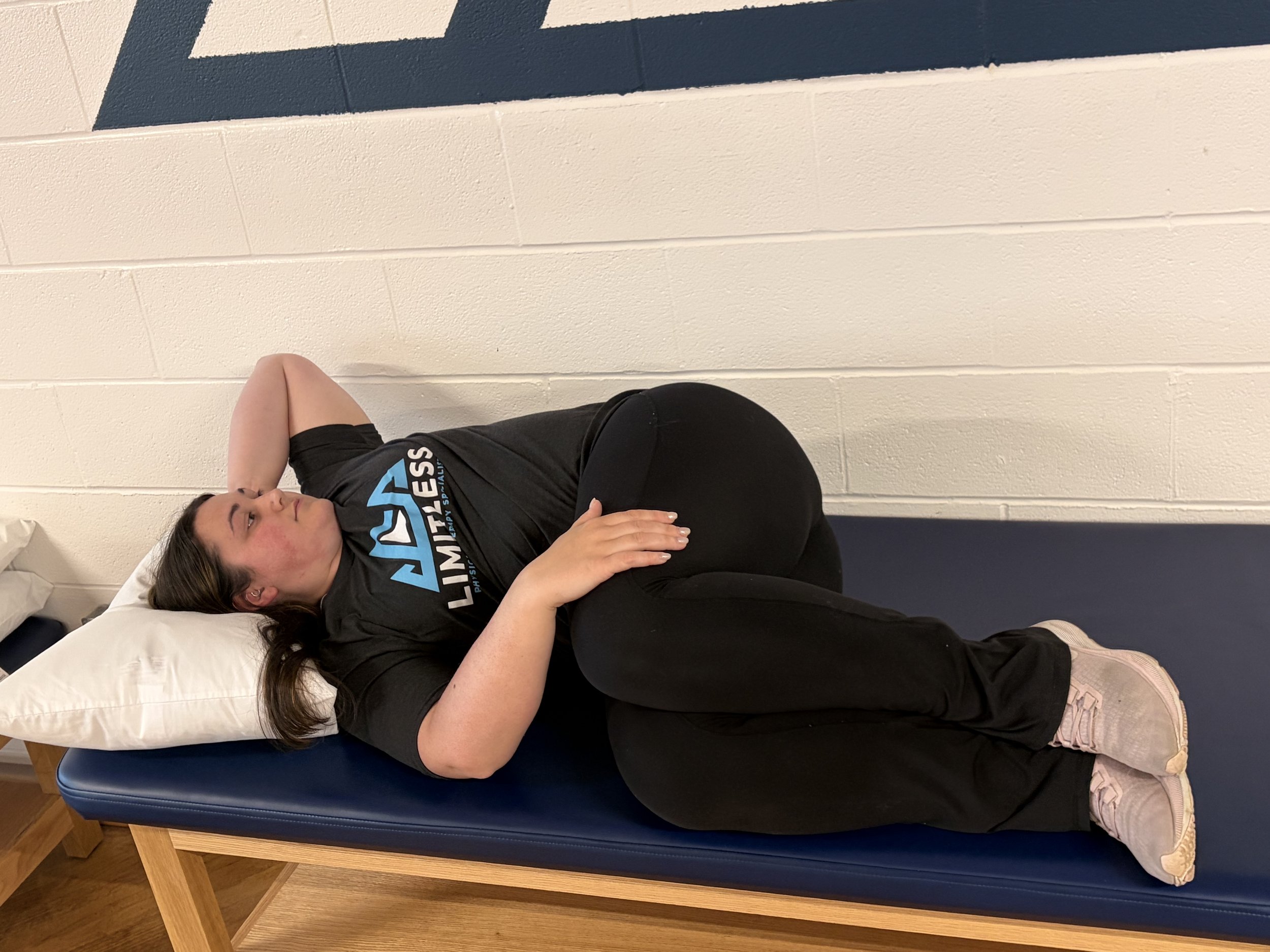
Position 4
Book Openers (extra important for cesarean delivery prep)
Photo by Limitless Physical Therapy
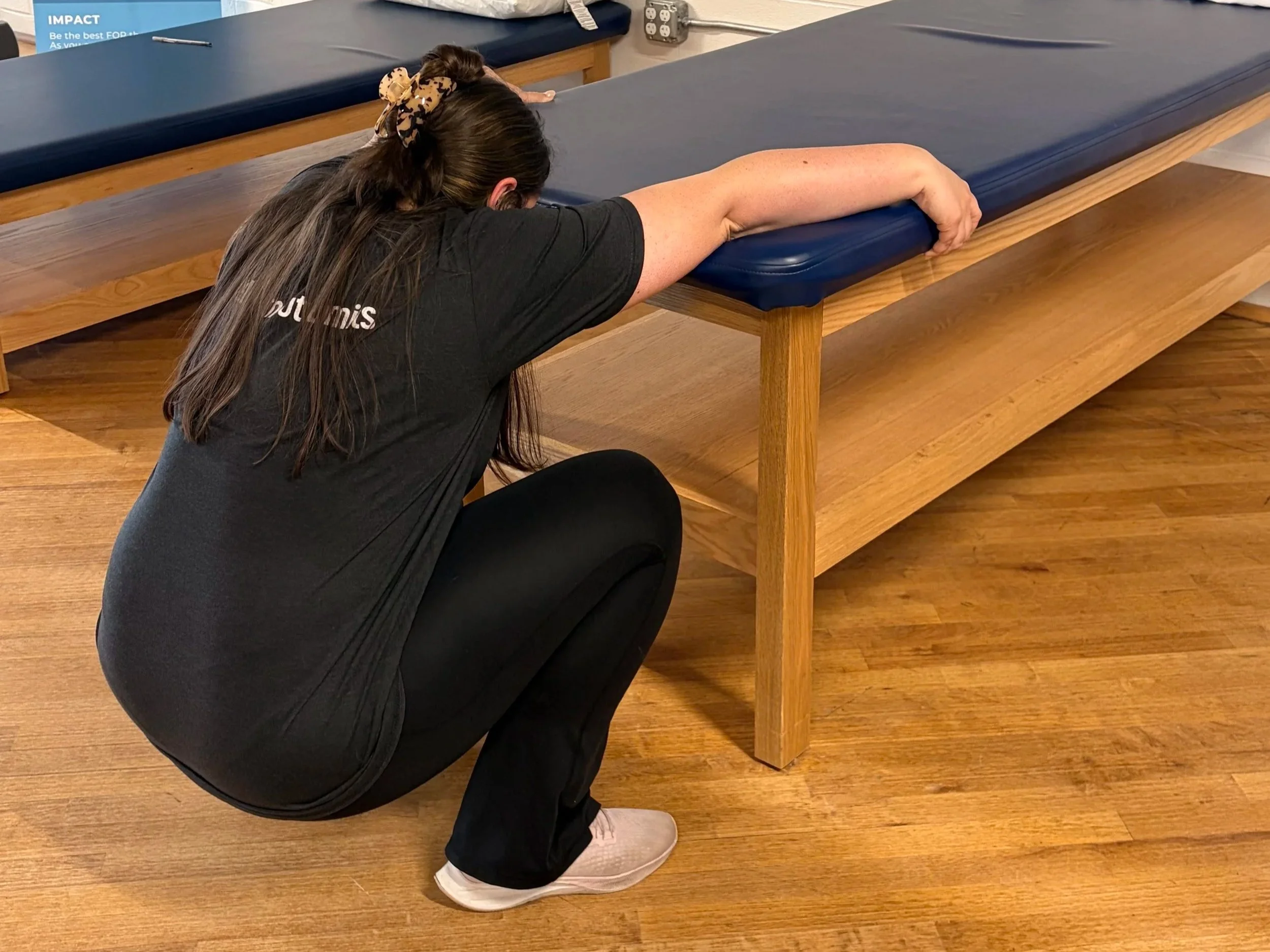
Position 5
Supported Deep Squat
Photo by Limitless Physical Therapy
Pelvic floor direct training and prep can be initiated during this time as well, and focuses on coordination and the mechanics of pushing that is required in the 2nd stage of labor. In pelvic PT this coordination is referred to as “Full Range of Motion,” meaning the pelvic floor muscles can contract and shorten as well as relax to a lengthened position. This coordination training can be done under the initial guidance of a pelvic PT to encourage appropriate intensity and synchronization with breathing and your abdominal muscle activity. Once this skill is achieved, you can add depth by coordinating vocalizations and breath, which will help simulate relaxation during the 2nd stage of labor. Additionally, practice of this skill and vocalization can be performed in a series of different positions: lying on your side, laying in a hands and knees position, modified happy baby positions, and the supported deep squat.
The final piece of pelvic floor direct prep is perineal massage. The pelvic floor muscles and perineal region have to stretch anywhere from 25%-245% of their original length - performing perineal massage can help in desensitizing the perineal tissue to the stretch and pressure sensations, as well as improve tissue mobility. It's been found to reduce perineal tearing, pain experience, improve wound healing, and reduce fecal incontinence.
Around 34 weeks you can begin perineal massage, it is encouraged to also begin this under the guidance of a pelvic floor physical therapist to optimize positioning, coordination of the self massage, and identify your steps to progress the technique. Ideally, this is performed for 10 minutes in length, 3-4 times per week.
During pregnancy, there is significant focus on babies' health and growth, as well as preparing for parenthood and readying the home for a new addition. These are important and necessary components of pregnancy. That being said, there is a growing consensus that women who enter into labor and delivery with good education and understanding of what can be expected or experienced, have better outcomes and improved pelvic health. So don’t hesitate to reach out to a pelvic therapist, doula, or labor and delivery provider for guidance during this time. Birth is spontaneous and there are many components that are beyond our control, however there are many pieces within our control when it comes to preparation and recovery — so find a provider to educate, support, and guide you through!